
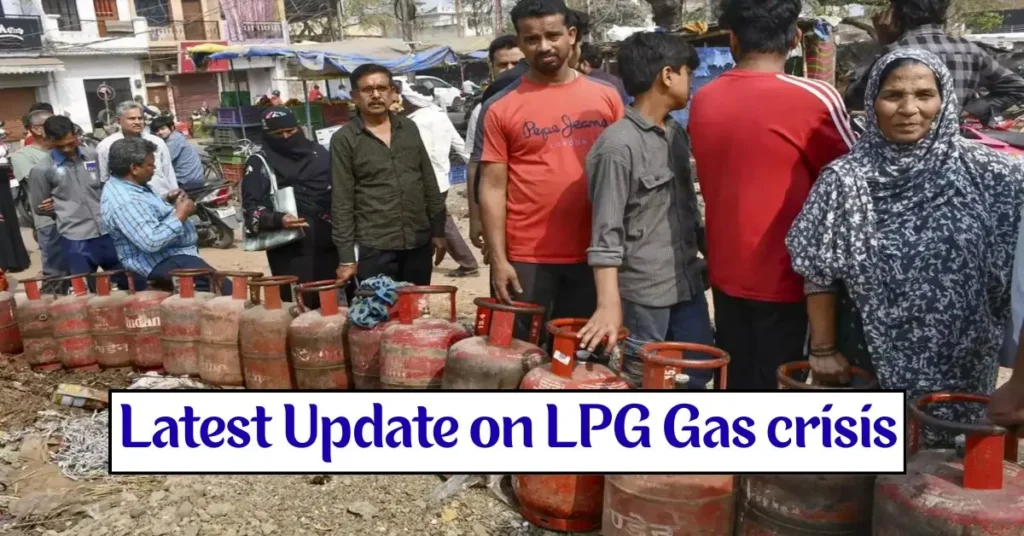
The LPG gas crisis in India has become a major topic of discussion in recent months. Cooking gas is an essential fuel used in millions of households across the country. Any disruption in its supply directly affects daily life. Recently, several cities have reported rising prices, delays in cylinder deliveries, and concerns about shortages. These issues have created anxiety among consumers and businesses that rely on LPG for daily operations.
India is one of the largest consumers of liquefied petroleum gas. More than 330 million households use LPG for cooking, making it a critical energy source for the country.
This article explains the current LPG gas crisis in India, its causes, its impact on households and industries, and the steps taken by the government to manage the situation.
What is the LPG Gas Crisis in India?
The LPG gas crisis in India refers to the recent increase in LPG cylinder prices, supply disruptions in some areas, and rising demand for cooking gas. These issues have created pressure on the supply chain and made access to LPG more difficult for some consumers.
One of the major reasons behind the current situation is global energy market instability. Conflicts in the West Asia region have affected shipping routes and fuel supply chains, which has reduced the availability of LPG imports.
India imports a large share of its LPG requirements, especially from Middle Eastern countries. When global supply routes face disruptions, the domestic market also experiences shortages or price increases.
At the same time, demand for cooking gas continues to rise as more households switch to LPG as their primary cooking fuel.
Key Causes of the LPG Crisis in India
Several factors have contributed to the LPG shortage in India. The following table explains the main causes.
| Cause | Explanation |
|---|---|
| Global Energy Conflict | Tensions in West Asia have disrupted LPG supply routes and increased fuel costs. |
| High Import Dependency | India imports nearly two-thirds of its LPG consumption from foreign countries. |
| Rising Demand | More households are using LPG due to government schemes and urbanization. |
| Panic Booking | Many consumers have booked cylinders in advance due to fear of shortages. |
| Black Marketing | Illegal sale and hoarding of cylinders in some areas have created artificial scarcity. |
India consumed about 33 million metric tons of LPG in recent years, and a significant portion of this demand is met through imports.
Due to these combined factors, both domestic consumers and commercial users have started experiencing challenges in obtaining cylinders.
Karnataka 2nd PUC Result 2026 @karresults.nic.in
SSC CPO Result 2026 : Steps to Download Paper 1 Cut Off @ssc.gov.in
Impact of LPG Crisis on Households
The impact of LPG crisis on Indian households is significant because LPG is the main cooking fuel in most homes.
Recently, the price of a 14.2 kg LPG cylinder increased by around ₹60, pushing the cost in cities like Delhi to about ₹913.
For middle-class and low-income families, this increase can affect monthly household budgets.
Major Household Impacts
- Increased cost of cooking gas
- Delays in cylinder delivery
- Panic bookings among consumers
- Pressure on low-income families
Many households that depend on subsidies under government schemes are particularly affected when prices rise.
Impact on Businesses and Industries
The commercial LPG shortage in India has also affected small businesses such as:
- Restaurants
- Hotels
- Street food vendors
- Small food processing units
- Catering services
Some businesses have reported difficulty obtaining commercial cylinders. In certain areas, the price of commercial LPG cylinders has increased sharply due to limited supply.
Hotels and eateries in some regions have even started switching to alternative cooking fuels such as induction cooktops or coal to manage their operations.
This shift increases operational costs and may affect employment in the hospitality sector.
Government Measures to Manage the LPG Crisis
The government has taken several steps to stabilize the LPG supply in India.
Key Measures Taken
- Increase in domestic LPG production
Refineries were instructed to increase cooking gas output to manage demand. - Priority for household LPG supply
Domestic consumers are being given priority over commercial users. - Action against black marketing
Authorities have conducted inspections to stop illegal sale of LPG cylinders. - Encouragement of piped natural gas (PNG)
Households with access to PNG are encouraged to shift from cylinders.
Domestic LPG production has already increased by around 25–30 percent to stabilize the supply.
These steps aim to ensure that cooking gas remains available for households.
LPG Consumption Growth in India
Government schemes have played a major role in increasing LPG usage across the country.
One of the most important initiatives is the Pradhan Mantri Ujjwala Yojana (PMUY), which provides LPG connections to poor households.
The scheme significantly increased LPG coverage in India.
| Year | LPG Consumers |
|---|---|
| 2014 | 14.5 crore |
| 2023 | 31.3 crore |
This expansion has improved clean cooking access but has also increased overall demand for LPG.
As more households rely on LPG, managing supply and pricing becomes even more important.
JSSC ANM Admit Card 2026 OUT, Download JANMCE Hall Ticket
(Out) DSSSB MTS Admit Card 2026 – Know Exam Date & Guidelines
Future Outlook of LPG Supply in India
Experts believe that the future of LPG supply in India will depend on several factors.
Important Factors
- Stability in global energy markets
- Increase in domestic production
- Expansion of piped natural gas networks
- Strong monitoring of LPG distribution
If global supply routes stabilize, LPG prices and availability may improve in the coming months.
At the same time, India is investing in alternative energy sources to reduce dependency on imported fuels.
Conclusion
The LPG gas crisis in India highlights the challenges of managing energy supply in a growing economy. Rising demand, global supply disruptions, and increasing fuel prices have created temporary difficulties for consumers and businesses.
However, the government has taken several steps to increase production, control black marketing, and prioritize domestic supply. These measures are expected to stabilize the situation gradually.
In the long term, expanding piped natural gas networks, improving domestic production, and diversifying energy sources will help India reduce the risk of similar crises in the future.
For now, responsible consumption and proper monitoring of LPG distribution remain important to ensure that cooking gas reaches every household that needs it.
Click to Read More in Detail here!
FAQs on LPG gas crisis in India
1. What is causing the LPG gas crisis in India?
The main causes include global supply disruptions, rising demand for cooking gas, high import dependency, and panic booking of LPG cylinders.
2. Has LPG cylinder price increased in India recently?
Yes. Domestic LPG cylinder prices increased by around ₹60 in March 2026 in many cities across India.
3. Is there a shortage of LPG in India?
There have been supply disruptions in some areas, especially for commercial cylinders. However, the government says domestic supply remains stable.
4. How many households use LPG in India?
More than 330 million households use LPG as their primary cooking fuel.
5. What steps is the government taking to control the LPG crisis?
The government has increased LPG production, prioritized domestic supply, taken action against black marketing, and encouraged the use of piped natural gas.